
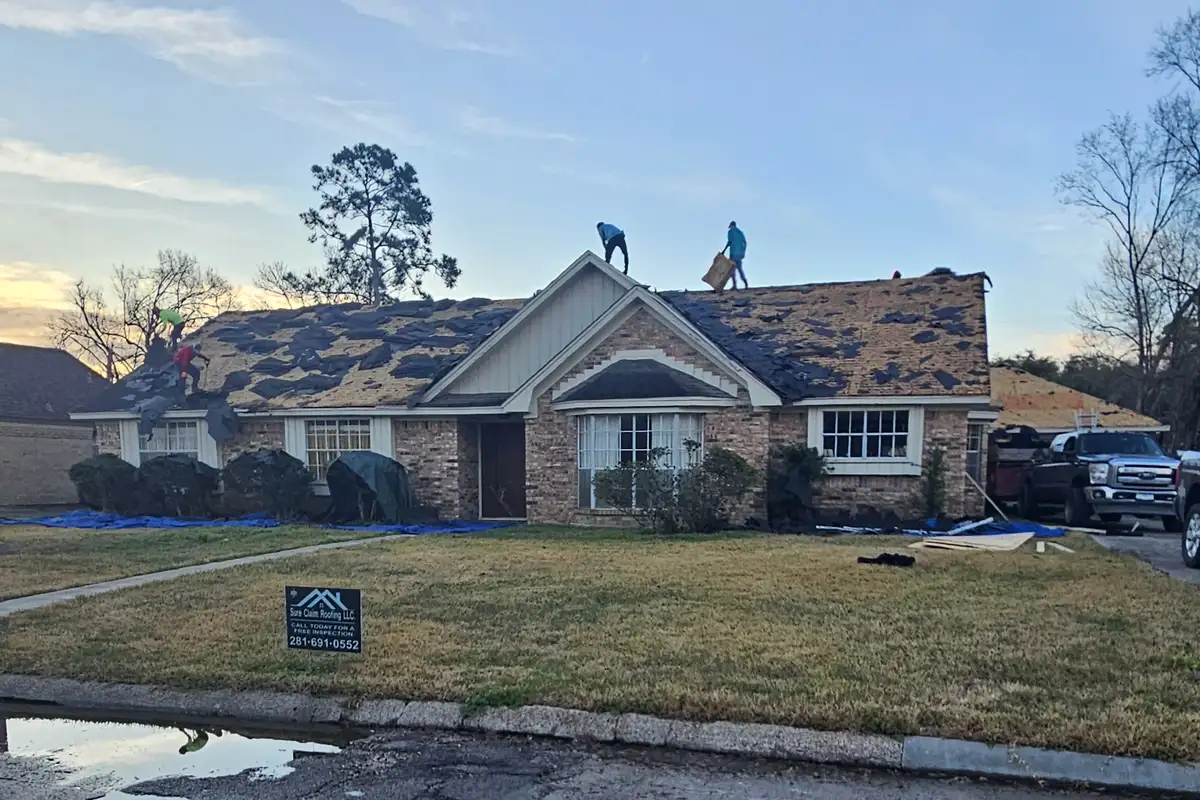
The main difference is what remains beneath the new roof
Tear-off and overlay are different methods, not simply different prices for an identical job. With tear-off, the existing covering is removed to a stated depth. With an overlay, an existing covering remains beneath the new shingles.
That changes access to the supporting surface and existing details. The quote should identify the method clearly, including the roof sections and layers involved. A proposal saying only “new shingles” does not explain whether the old covering remains.
A useful comparison starts with the existing roof's condition and the work that needs to be done. It should then consider the selected manufacturer's requirements and the applicable rules for the property. Do not choose a method from disposal savings alone.
This guide explains the tradeoffs. It does not establish that an overlay is available or appropriate for your particular roof. The actual replacement proposal should state the method being offered and why it fits the assessed conditions.
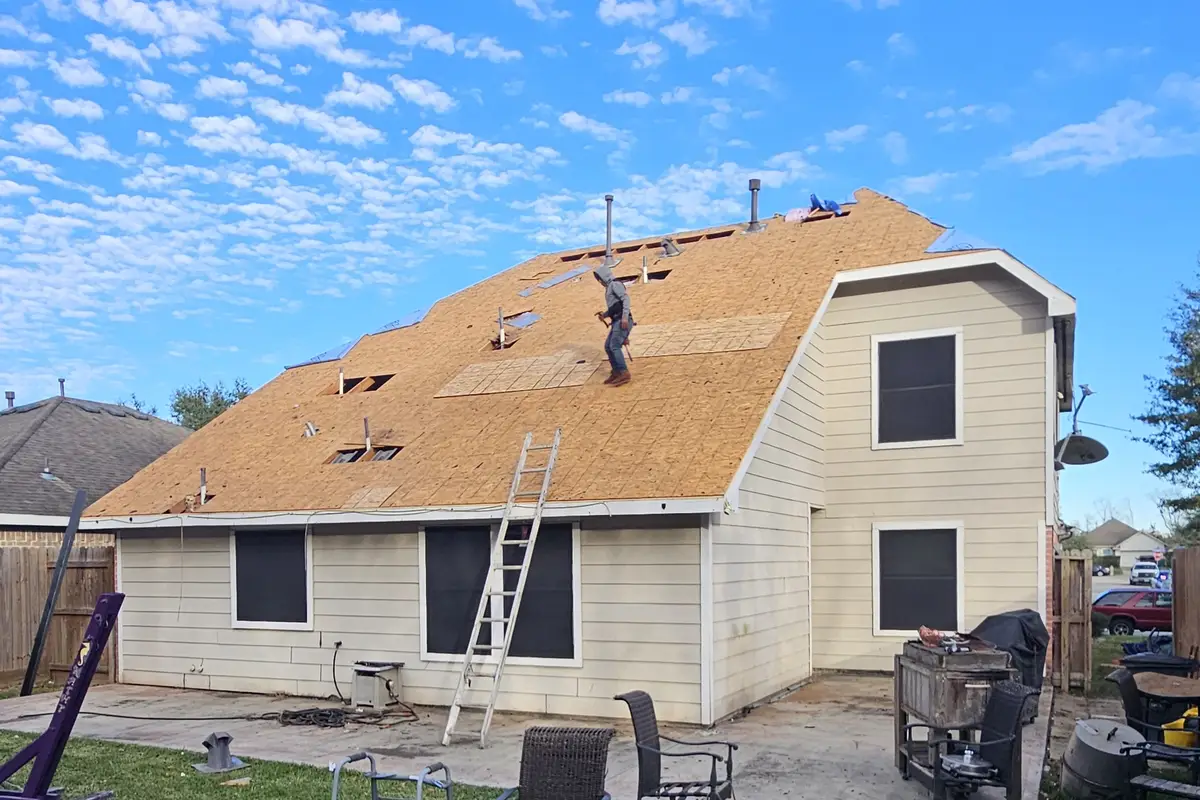
Why access to the deck changes the decision
The deck is the surface beneath the roofing layers. Removing the existing covering exposes its upper surface, which can make the condition and required work clearer before a new assembly is installed.
With an overlay, the retained covering separates the new work from that surface. This matters when an assessment raises concerns about concealed wood, uneven areas or the treatment of existing details. New shingles do not repair a damaged substrate merely by covering it.
GAF's steep-slope field guide discusses reasons for tear-off, including deteriorated decking and flashing work, and describes conditions for roofing over an existing assembly. Its conditional approach is more useful than treating either method as suitable in every case.
For a quote, identify how decking concerns are handled under the proposed method. Our decking allowance guide explains the financial and authorization side of that decision.
Existing condition matters more than a simple age label
A roof's condition is more informative than a single age number when comparing removal methods. Surface flatness, existing problems, layers and the suitability of the underlying system all belong in the assessment.
An overlay should not be used as a way to avoid explaining an unresolved leak. If the roof has recurring water entry, the replacement plan needs to address the relevant condition and details. Covering the field of shingles does not automatically identify or correct the water path.
Likewise, a roof that looks generally flat from the ground still needs an appropriate assessment. A ground-level view does not establish every component's suitability. The decision should connect the observable condition, the proposed assembly and the requirements of the actual product.
For homeowners who do not yet know the scope, a roof inspection is a useful starting point. The result should help frame the replacement or repair decision rather than begin with a predetermined product package.
Flashing and roof transitions need their own plan
Roof-to-wall connections, valleys, chimneys and penetrations should be described regardless of the removal method. These details connect the roof covering to other surfaces, so a general statement about new shingles is not enough.
Removing existing material can provide access for rebuilding a transition. Retaining parts of the assembly creates a different work boundary. The estimate should explain which details remain and which are replaced or reconstructed.
Consider this hypothetical example: two options cover the same roof area, but one includes tear-off and rebuilding a wall transition while another retains the covering and existing transition. The difference is not only a debris-removal item. It is also access to, and treatment of, an important connection.
Use the component guide to identify the parts that belong in the discussion. Compare the treatment of the actual roof, rather than assuming all details are included because the proposal uses the word “replacement.”
Compare installation and coverage requirements
The selected product and assembly can set conditions for installation and warranty eligibility. A method that appears possible in general may not qualify for the particular package being proposed.
Read the product documents and the stated coverage together. Do not infer a warranty tier from the manufacturer's name or assume that an overlay and a tear-off carry identical terms. The agreement should name the actual coverage offered for the actual installation.
Local requirements are a separate check. Existing layers, assembly conditions and the scope of work need to be considered for the property. This guide does not transplant a layer allowance or code provision from one city to another.
The practical comparison is a specific one: proposed method, product system, treatment of existing details and actual coverage terms. Our warranty comparison guide helps you read the coverage without turning a general product claim into an installation promise.
Look beyond removal and disposal in the price comparison
Removal affects the scope, but the difference between two proposals can extend well beyond disposal. Deck access, transition work, replacement components and condition-based changes all influence what is being purchased.
Keep the same project boundary when comparing options. If one includes the porch and attached garage while another excludes them, resolve that first. Then compare materials, retained details, allowances and coverage. A lower total is not a complete explanation of the difference.
For an overlay option, the retained layer also remains part of the building's roof history. Record what is present and what was added. That information can matter when the roof is evaluated for future work, even though no specific future removal date can be predicted.
For tear-off, identify the stated removal depth and how unexpected conditions will be authorized. Clear change terms make the access advantage understandable without pretending the final quantity of every concealed condition is already known.
Use a comparison record that explains the method
A short record can include these entries: existing roof layers and condition, proposed removal method, deck assessment and allowance, retained or rebuilt transitions, selected materials, applicable approval responsibilities and actual coverage documents.
Each entry should describe the project rather than repeat a sales label. “Existing wall transition retained subject to assessment” conveys a different decision from “all details included.” The goal is to know where the new work begins and ends.
Keep any approved changes with that record. If removal reveals additional work, the final project documents should explain the difference from the original scope. If components remain, their treatment should be part of the agreed description.
This approach makes it possible to compare two methods without guessing that one is always better. The appropriate choice is the one supported by the roof's condition, the intended assembly and the requirements applying to the property.
Compare the response to a specific roof condition
Imagine a homeowner with recurring water entry near a wall intersection. One option proposes new shingles over the existing covering. Another proposes removal and a defined plan for the intersection. The useful comparison is how each option addresses the suspected water path, not simply which leaves less debris.
Neither a stain nor a shingle age proves the exact cause. The assessment needs to connect the observed concern with the proposed work. If the plan retains the existing detail, that decision should be understandable. If it rebuilds the detail, the scope should name the work.
Now imagine a roof where the main concern is a broad replacement decision rather than a recurring localized symptom. The comparison still needs the existing condition, layers, deck plan and product requirements. A different starting concern changes the discussion but does not remove the need for a defined scope.
Record the decision, not just the method name
A useful record identifies why the chosen method fits the assessed roof and what remains under the new covering. It should also identify any condition that changes the plan. This is especially important where a proposal depends on existing components being suitable.
Then compare the final assembly and paperwork. If the product, accessories or coverage package changes with the method, make that explicit. You can judge an alternate fairly only when its physical work and terms are both visible.
This keeps the removal decision tied to the building rather than a universal claim that one method always provides the same outcome.
Choose the next step from the roof concern
If you are dealing with recurring leaks, visible deterioration or uncertainty about existing layers, begin with an assessment. If replacement is already the intended project, request a written scope that names the removal method and the treatment of the deck and transitions.
Provide the property address, the concern and any known roof history. Existing proposals are useful when you want to compare an overlay with a tear-off option. Ground-level photos can help explain the request without entering the roof work area.
Request an estimate to discuss the actual roof, or use the quote comparison guide to organize the methods and conditions in proposals you already have.