
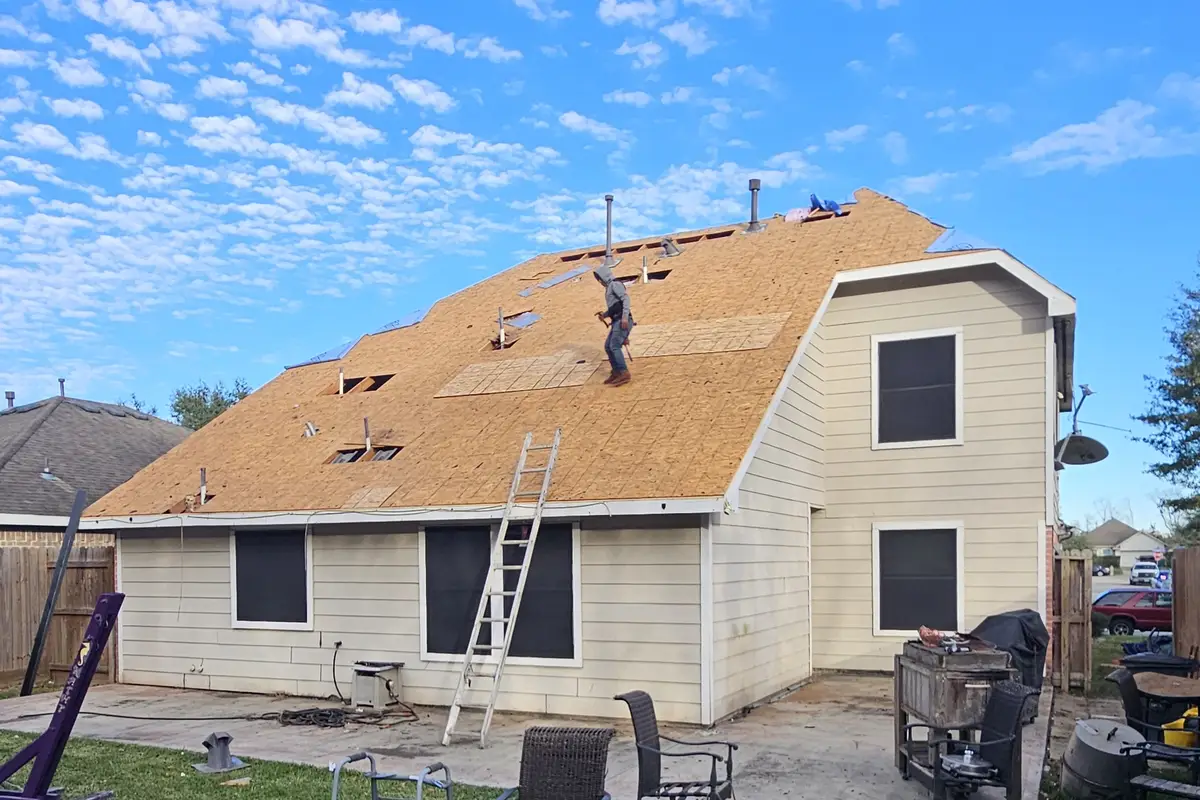
Baytown distinguishes shingles from the roof deck
The City of Baytown's residential permit guidance makes a useful distinction: replacing roof shingles only appears in its permit-exempt examples, while installing, replacing or repairing roof decking appears in the permit-required list. The city also lists structural component work as requiring a permit.
Read the city's residential permit guidance when defining the project. The page was reviewed October 26, 2026. Its shingle-only example should not be broadened into a statement that every reroofing project is exempt.
The practical purchase decision is to identify the work beneath the short label “roof replacement.” A project involving only the covering differs from one involving the supporting deck or structure. The written scope should make those differences visible before work begins.
A mailing address is not the jurisdiction decision
A Baytown mailing address is useful for locating the property, but the mailing city alone does not settle which authority administers permits. Use the exact property location and applicable jurisdiction rather than applying one city's list to every nearby home.
This matters when comparing estimates across the Houston area. A permit statement copied from a neighboring city's project may not describe your address. The same is true for a general internet answer that omits the work being performed.
For a useful project record, keep the property address, identified jurisdiction and proposed scope together. If the scope changes, revisit the permit question using the changed work. A response about shingles only does not automatically answer a later question about decking.
NewRoof's service-area overview helps you find the relevant location page. It does not replace the authority's decision about the particular property and project.
Decking discovered during tear-off can change the plan
A roof estimate may initially describe the covering and a conditional allowance for wood beneath it. After removal, an identified deck condition can create additional work. That is the point where an assumption about a shingle-only project needs particular care.
For an illustrative planning example, a homeowner agrees to a covering replacement with a defined change process for decking. Removal then exposes a section proposed for replacement. The useful response is to identify the section, the reason, the quantity and the permit implications before the new assembly covers it.
This example does not predict that your roof has hidden damage. It shows why permit responsibility and change authorization belong in the estimate even when the final decking quantity is unknown.
Our decking allowance guide explains included quantities, unit pricing and documentation. It can help you make the financial change and the work description understandable at the same time.
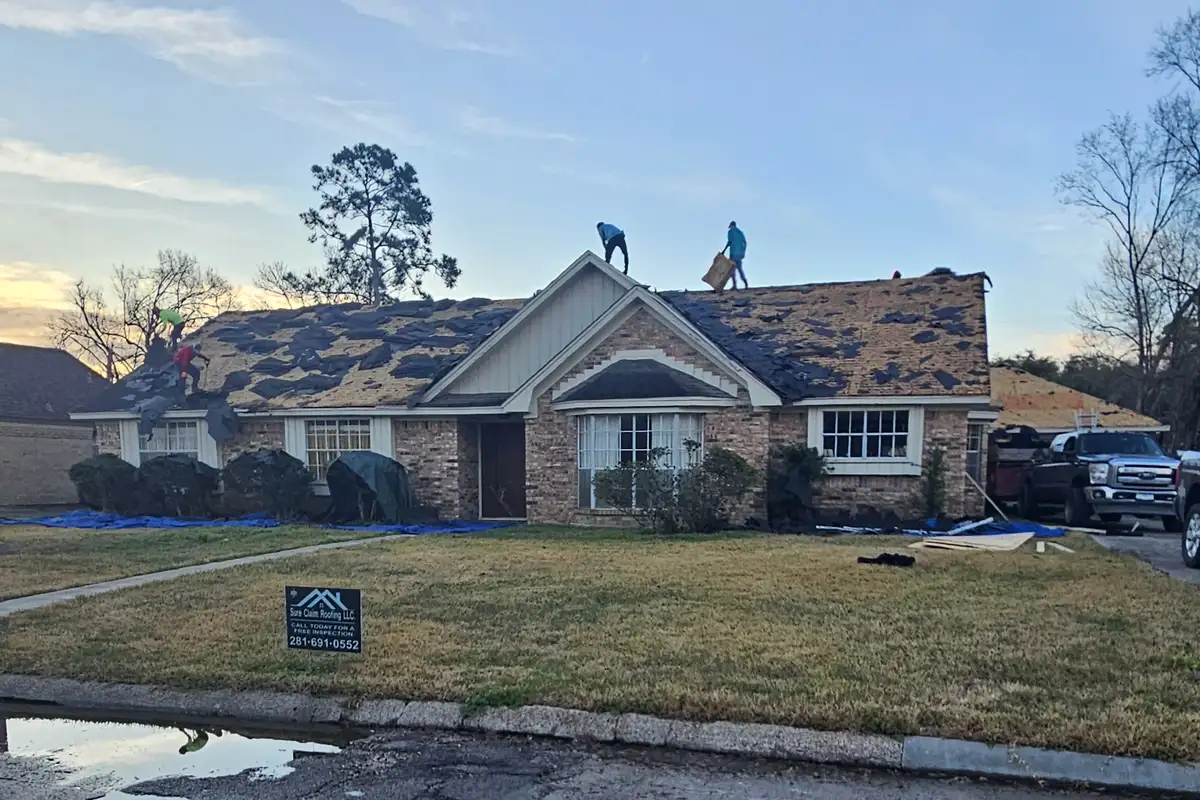
Define responsibility before installation day
The agreement should identify who handles any applicable permit application and inspection coordination. That is a practical project responsibility, not something to infer from the presence of a familiar contractor name.
Record how required documents will be shared and where the final copies will be kept. If an inspection needs to occur before work is covered, the construction plan should account for it. A schedule that discusses only shingle delivery can leave that important dependency unclear.
It is also useful to identify how scope changes will be communicated. A homeowner who is away during removal should know who can authorize added work and how that decision is documented. Clear responsibility reduces the need to resolve the process while part of the roof is open.
Name permit and inspection responsibility in the written scope, together with the documents you will receive at closeout.
City permits and windstorm records serve different purposes
A local permit question and a windstorm certification question should be handled separately. The authority, the property conditions and the documentation can differ. Do not treat an answer about one as an automatic answer about the other.
In this region, windstorm program planning can depend on the property's exact location and applicable insurance program. The windstorm certification guide explains that topic in more detail and links to Texas Department of Insurance information.
For the estimate, use separate entries for local permits, any applicable windstorm coordination and final records. This keeps the project understandable and avoids a vague “paperwork included” statement covering several different decisions.
A roof product's wind-related rating is another separate item. A product label is not a permit, an inspection record or a certificate for the property. Keep the product documents and regulatory records together without confusing their roles.
Use a short permit planning record
Before authorizing roof work, keep a simple record with five items: the property jurisdiction, the scope described to that authority, the applicable permit conclusion, the party responsible for applications and inspections, and the documents expected at closeout.
If the scope changes, update that same record rather than starting a separate chain of assumptions. The key question is whether the answer still addresses the work now proposed. This is especially useful when a covering project becomes a decking project during removal.
Do not rely on an unspecified “permit allowance” to explain the process. A cost provision and a responsibility are different things. The scope should identify both where applicable, using the terms of the actual proposal.
To begin the roof discussion, request an estimate with the property address and concern. If you already have a proposal, include any permit or decking question you want to resolve while comparing the work.